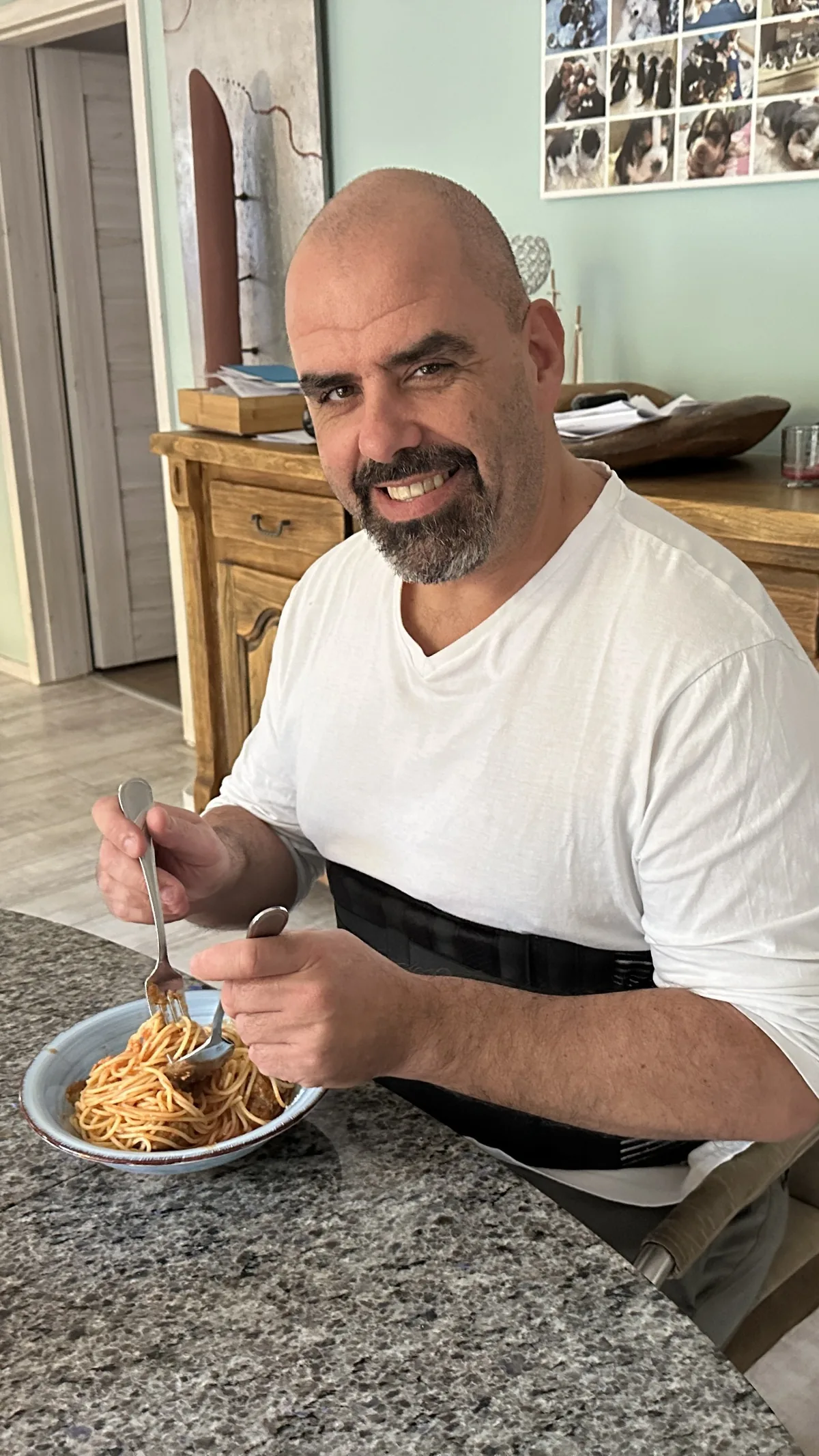
Why you never feel full: 7 common reasons in everyday life

Many people don't feel properly full even though they eat enough. Often this isn't just about the amount of food, but about habits, pace, distraction and how well the feeling of fullness is noticed in everyday life at all.
If you're often hungry again shortly after eating, or constantly feel like you need something more, you're not alone. In many cases, the cause isn't a lack of discipline but an interplay of everyday life, behaviour and eating routines.
Please note: Balance Alligator is not a medical device and not a medication. It is not intended to diagnose, treat or cure any illness. It is a mechanical everyday aid designed to support people in shaping their eating habits more consciously in daily life.
1. You eat too fast
Satiety needs time. If you eat very quickly, you often notice too late that the point of real fullness was already reached. This easily leads to eating larger portions than would actually be necessary.
When food "disappears" within a few minutes, the body barely has a chance to send a clear stop signal. Eating more slowly and pausing between bites can already make a noticeable difference here.
2. You eat on the side, not consciously
Many meals today happen next to the phone, the laptop or between appointments. When eating only happens on the side, taste, quantity and fullness are often noticed less consciously.
If you mainly watch the screen instead of paying attention to yourself while eating, you often only realise late that you're actually full. Eating more consciously doesn't mean perfection, but moments in which food is truly allowed to take centre stage again.
3. Your portions have grown over time
Over time, many people adapt to larger portions without consciously noticing it. What eventually seems "normal" is often simply a size that has become habit.
Bigger plates, generous restaurant portions and "it has to be worth it" thinking all contribute to shifting your inner sense of appropriate amounts. A smaller portion then automatically feels like "too little", even though it would often be physically enough.
4. Stress changes your eating habits
Under stress, many people eat faster, more restlessly or more impulsively. Then not only is more eaten, but it also becomes harder to notice when the actual point of fullness has been reached.
Some people eat rather too little under stress and then a great deal all at once later. Both extremes make it harder to build a stable feeling of fullness that you can rely on.
5. You confuse hunger with appetite
Not every urge to eat is real physical hunger. Appetite can be triggered by smells, images, habits, certain times of day or emotions, without the body really needing energy.
When hunger and appetite constantly blur into each other, it becomes hard to trust your inner signal. It helps to briefly ask yourself more often: "Am I physically hungry right now, or is it more a craving, a habit or a feeling I want to soothe?"
6. Your daily routine lacks structure
If you eat very irregularly, you more often end up in situations where hunger suddenly becomes very strong. It then gets harder to eat calmly and notice a feeling of fullness in time.
Unpredictable daily schedules, skipped meals and eating late while very hungry cause the body to react as if in "emergency mode": a lot, quickly, instead of relaxed and conscious.
7. You need more support in everyday life
Some people know exactly what they should do, but can't put it into practice consistently in everyday life. In such cases, an additional everyday aid can be interesting if it supports you in choosing portions more consciously or noticing your feeling of fullness earlier.
What matters is not seeing such aids as miracle tools, but as support for what you want to change anyway. They don't replace a decision, but they can help you follow through on it more consistently in everyday life.
What can help you feel full earlier in everyday life
Simple changes often help: eating more slowly, experiencing meals more consciously, structuring portion sizes more clearly and getting better at recognising your typical triggers for uncontrolled eating.
The less you have to fight against yourself in everyday life, the easier it becomes to develop a feeling of fullness you can rely on. For many people, this is a decisive step towards a calmer, more sustainable way of eating.
Frequently asked questions about not feeling full
Why don't I feel properly full despite eating?Often it comes down to eating speed, distraction, stress, large portions or hunger and appetite getting mixed up.
Is this a sign of a lack of discipline?In most cases, no. It's usually more an everyday and behavioural pattern than a question of strength or weakness.
What can I actually do?Eat more slowly, tune in more consciously, reduce portions, eat more regularly, and where needed, use aids that support you in noticing a feeling of fullness earlier.
Conclusion and next step
If you recognise yourself here, you're not alone. Many people struggle less with knowledge and more with putting it into practice in everyday life. Shifting the focus away from strict diets towards a better relationship with hunger and satiety can make a big difference.
In our other articles and in the FAQ you'll find further ideas about hunger, appetite, hormones like ghrelin and practical everyday support. There you'll also learn what role the Balance Alligator can play as a mechanical everyday aid in this context.
Support satiety mechanically
No injections, no surgery, no medication. Try it risk-free for 30 days.
View product